
The Lobby
In 2007, Professors John Mearsheimer and Stephen Walt published "The Lobby" in book format with citations. This work was important for documenting the influence of the Israel lobby in the American government but also for underscoring the influence of the lobby in getting the United States to invade Iraq in 2003. In their chapter titled: "Iraq and Dreams of Transforming the Middle East," the professors wrote:
"In contrast to these alternative explanations, we argue that the war was motivated at least in good part by a desire to make Israel more secure. This was a controversial claim before the war started, but it is even more controversial now that Iraq has turned into a strategic disaster. To be clear, the individuals and groups that pushed for war believed it would benefit both Israel and the United States, and they certainly did not anticipate the debacle that ultimately occurred. Regardless, a proper account of the lobby's role in encouraging the war is ultimately a question of evidence, and there is considerable evidence that Israel and pro-Israel groups—especially the neoconservatives—played important roles in the decision to invade." Copyright 2007 John J. Mearsheimier and Stephen Walt.
The lobby consists of paid lobbyists, big money donors, Israeli politicians. They include Zionist Jews but also Christian Zionists. The American Israeli Public Affairs Committee ("AIPAC") is the most well known of the lobby groups. Per Wikipedia:
"The American Israel Public Affairs Committee (AIPAC; /ˈeɪˌpæk/, AY-PAK[4]) is an American pro-Israel lobbying group that advocates for policies strengthening the U.S.–Israel relationship.[5] Founded in 1954 as the American Zionist Committee for Public Affairs, the organization adopted its current name in 1959.[1] AIPAC is considered one of the most influential lobbying groups in the United States.
Until 2021, AIPAC did not raise funds for political candidates itself; its members raised money for candidates through political action committees unaffiliated with AIPAC and by other means[which?].[6] In late 2021, AIPAC formed its own political action committee and announced plans for a Super PAC, which can spend money on candidates' behalf.[7][8][9] AIPAC's critics have said it acts as an agent of the Israeli government and that it has a "stranglehold" on the United States Congress.[10] AIPAC has been accused of being strongly allied with Israel's Likud party and the U.S. Republican Party. An AIPAC spokesman has called this a "malicious mischaracterization".[6][11][12]
The Israel lobby is responsible for the huge amounts of campaign spending in races in which anti-Israel candidates run. In Michigan's Democratic senate primary, the lobby has spent $60 million to support Haley Stevens, an avowed Zionist, against Dr. Abdul El Sayed, a progressive who wants to stop all funding of Israel. If El-Sayed wins despite the unprecedented influx of cash by outside groups, it would signal, in conjunction with the wins by pro-Palestine progressives in New York City, that there is political space to defeat the Lobby and massive cash dumps.
In February 2026, AIPAC notoriously spent millions to defeat Democrat Tom Malinowski, who usually votes with Israel, simply because he voice concerns for unconditionally funding Israel while it was bombarding Gaza. So they paid for ads to go against Malinowski, which caused an anti-Zionist progressive to win the race.
AIPAC lobbies on behalf of Israel, yet it enjoys a unique exemption by not having to register as an agent of a foreign power.
 Factually
 Hannah Feuer
 Hafiz Rashid
 Philip Giraldi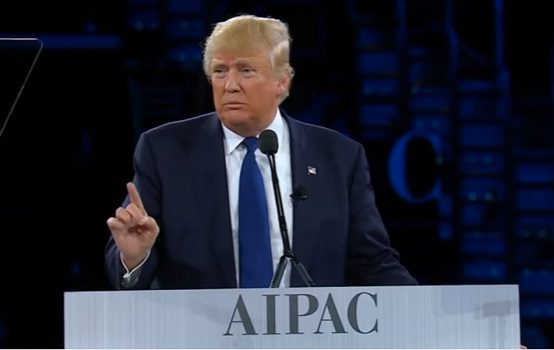
 JERUSALEM POST STAFF
The same goes in the UK and Australia: